My Say: Cape Verde and Egypt boleh, Malaysia sampai bila baru boleh?
This article first appeared in Forum, The Edge Malaysia Weekly on July 20, 2026 - July 26, 2026
As I write this article, football fans around the world are counting down to the 2026 Fifa World Cup final between reigning champions Argentina and European champions Spain. The new world champions will be crowned two days after The Edge reaches newsstands on Saturday morning.
Much as I admired France for their attacking flair and hoped football would finally go home to England — the birthplace of the modern game and whose only World Cup triumph came in 1966 — there can be little argument that Spain and Argentina deserve their places in the final. They have been, quite simply, two of the tournament’s most outstanding sides.
Yet regardless of who lifts the trophy, this World Cup has already produced two other champions: Cape Verde and Egypt. Sometimes, football’s greatest winners are not those who earn the silverware but those who rekindle the spirit and soul of the game itself.
At the first World Cup expanded to 48 teams, Cape Verde and Egypt did precisely that. Neither will return home with the trophy, yet both have claimed something no less enduring. They reminded the footballing world what Pele’s joga bonito, the beautiful game, was always meant to be.
Without the luxury of a galaxy of stars, they played with courage, imagination and collective purpose, qualities too often absent from international football in recent years. They became the tournament’s true custodians of the beautiful game.
Since the inaugural World Cup in Uruguay in 1930, Cape Verde’s campaign must rank among the competition’s most remarkable stories.
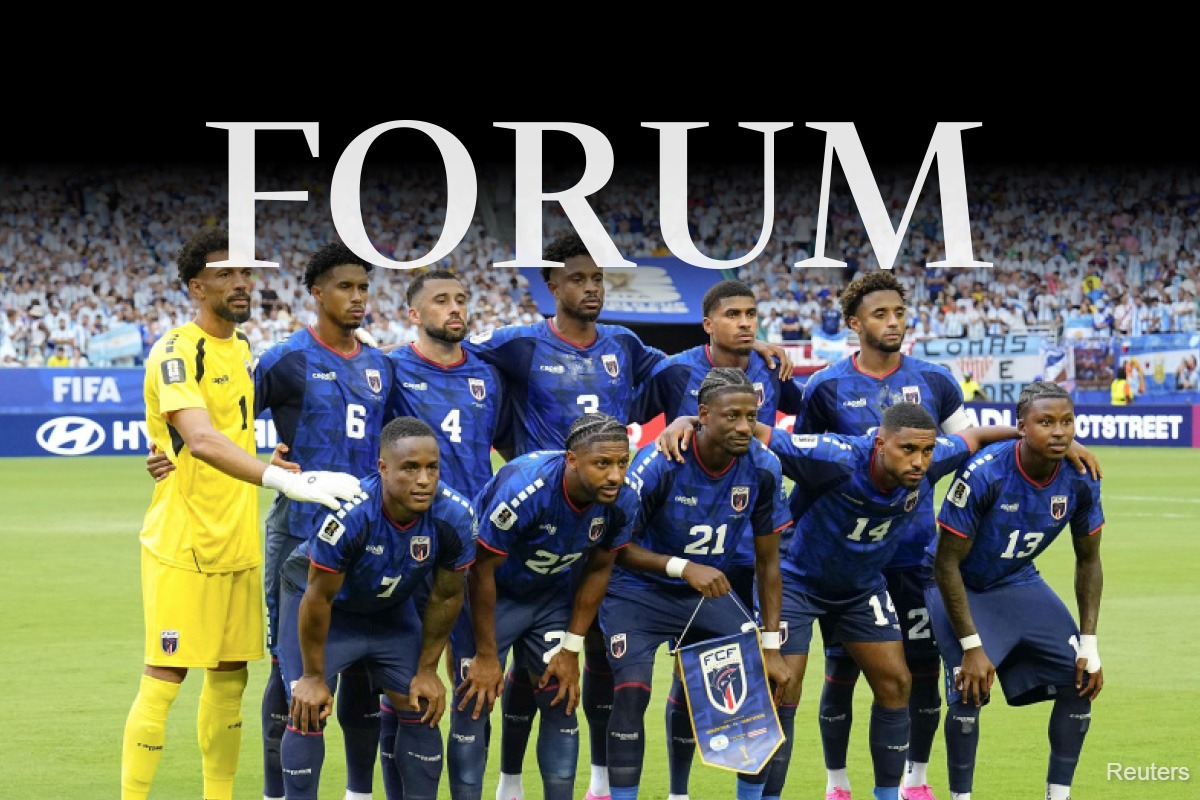
Home to little more than half a million people spread across 10 volcanic islands in the Atlantic Ocean off the coast of West Africa, the Blue Sharks arrived in North America as perhaps the tournament’s second least-fancied qualifiers after Curacao.
FourFourTwo, the world’s largest football monthly, described them in its 2026 World Cup guide as a side that “should enjoy lots of fun while it lasts, which may not be all that long”. Yet the magazine also noted that Cape Verde’s principal ambition would be to make life as uncomfortable as possible for their opponents.
To many observers, Cape Verde and Egypt were expected to be little more than courteous guests, making up the numbers before returning home with little to show for their efforts. Instead, both wrote memorable chapters in World Cup history.
Fifa’s eligibility rules, which allow players to represent a country through ancestral ties, enabled Cape Verde to draw heavily from its diaspora. Fourteen members of the 26-man squad were born abroad, in Portugal, the Netherlands and France. Even so, few pundits gave them much chance of progressing beyond the group stage.
Drawn alongside eventual finalists Spain, Uruguay and Saudi Arabia, an early exit appeared inevitable. But rather than retreat into cautious, safety-first football, Cape Verde embraced adventure. They held Spain to a goalless draw, recovered twice to earn a 2-2 draw against Uruguay, and secured passage to the knockout stage with another draw against Saudi Arabia.
Their reward was a Round of 32 meeting with Argentina, a match that would define their World Cup. Twice they fell behind the defending champions. Twice they fought back. When Sidny Lopes Cabral curled an exquisite strike into the top corner in the 103rd minute to level the score at 2-2, it became one of the defining moments of the tournament. Although Argentina eventually prevailed 3-2, the Blue Sharks departed with their reputation transformed, having stretched Lionel Messi and the world champions to their limits.
That, to me, was joga bonito in its purest expression: fearless football played with conviction, imagination and unwavering belief. Forty-year-old goalkeeper Vozinha stood firm against relentless waves of Argentine attacks, while players born thousands of miles from Cape Verde honoured their ancestral homeland with a commitment that transcended geography and nationality.
Egypt, meanwhile, arrived at the World Cup carrying a burden that had weighed on generations of players and supporters. They had never won a single match in their previous World Cup appearances. For a nation that has dominated African football, winning the continental title multiple times, they remain one of the sport’s perennial underachievers on the global stage.
At 34, Mohamed Salah entered what was almost certainly his final World Cup with one last opportunity to rewrite that history. And rewrite it he did. The long wait finally ended when he guided Egypt into the knockout stage, defeating New Zealand 3-1 and earning draws against Belgium and Iran.
In the Round of 32, Egypt overcame Australia on penalties. Then came the defining moment of their campaign: a Round of 16 encounter with Argentina, the reigning world champions.
Few expected Egypt to challenge one of football’s greatest teams. Yet they raced to a 2-0 lead and came within inches of creating one of the biggest shocks in World Cup history. This was even after Mostafa Zico’s “second” goal, after he finished off a stunning counterattack in the 58th minute, was ruled out.
In the pre-video assistant referee (VAR) era, the referee might have allowed the advantage to play. The move itself was extraordinary, a counterattack that travelled almost the entire length of the pitch, featuring Haissem Hassan’s dazzling run and dribbling before he delivered the ball to Salah who timed it perfectly for Zico to slot past the incoming Emiliano Martínez.
It was a goal worthy of the biggest stage and one of the best in the tournament but that existed only briefly in the memory of those who witnessed it. Had it stood, with Egypt holding a “three”-goal advantage deep into the second half, the impossible might have suddenly appeared within reach.
Argentina eventually recovered to win 3-2, although questions remain over the circumstances surrounding their decisive goal. Television replays suggest Salah may have been fouled in Argentina’s penalty area shortly before a counterattack ended with Enzo Fernandez scoring in the 93rd minute. Why wasn’t the VAR used in this case?
Yet Egypt left the pitch not as defeated outsiders but as a team that had earned admiration. They had broken a 92-year wait for a World Cup victory, scored eight goals in five matches, and pushed Messi and one of the greatest international teams of the modern era closer to elimination than many thought possible.
So what did Cape Verde and Egypt teach the football world?
Cape Verde reminded the world that greatness is not measured by population, history or reputation. A nation of barely half a million people proved that organisation, belief and unity within the squad can narrow the gap between the established powers and those who dream of joining them.
Egypt showed that history does not have to define the future. For 92 years, since their first World Cup appearance in 1934, they carried the weight of never having won a match on football’s biggest stage. But they refused to remain prisoners of the past and demonstrated that redemption is always possible when determination meets opportunity.
Together, Cape Verde and Egypt reminded the football world that joga bonito is not a nostalgic memory from another era. It remains a living philosophy, one built on courage, creativity and the belief that football is supposed to be an entertaining sport for the fans.
Together, despite the lack of stars, they exemplified the football philosophy that attack is still the best form of defence, even against a formidable team like Argentina. This is an approach even an experienced manager like England’s Thomas Tuchel should not have abandoned.
Their stories also reinforced a simple truth about sport: the greatest victories are not always reflected on the scoreboard. Sometimes they are found in the courage to challenge the impossible, in the willingness to dream beyond expectations and in the ability to inspire millions despite falling short.
The underdogs’ journey often becomes more memorable than the champions’ coronation. The champions lift the trophy, but the underdogs capture the imagination. The underdogs remind us why sport matters.
Both Cape Verde and Egypt ultimately lost to Argentina. Yet both won something far more enduring: the respect of their opponents, the admiration of neutral supporters and a place among the most memorable stories of this World Cup.
They reminded us that joga bonito belongs to everyone and that the boleh (can do) spirit, when embraced with conviction and purpose, can transform ambition into achievement.
Cape Verde boleh. Egypt boleh.
For Malaysian football, however, one question remains: sampai bila baru boleh?
Azam Aris is an editor emeritus at The Edge
Save by subscribing to us for your print and/or digital copy.
P/S: The Edge is also available on Apple's App Store and Android's Google Play.
The content is a snapshot from Publisher. Refer to the original content for accurate info. Contact us for any changes.
Comments