Everyday Matters: The call of leadership: Why we need a monozukuri mindset now
This article first appeared in Forum, The Edge Malaysia Weekly on March 9, 2026 - March 15, 2026
“Do the best you can until you know better. Then when you know better, do better.” — Maya Angelou (April 4, 1928 – May 28, 2014), American memoirist, essayist and civil rights activist.
There comes a time in the life of a nation when the question is no longer “What can we build?” but “What kind of leaders shall we become?”
Modern Malaysia stands at such a moment.
We have plans, blueprints, committees, labs, councils, road maps, summits — yet we still struggle with the same wounds: stalled execution, fragile institutions, inconsistent standards, wasteful inefficiencies and the quiet erosion of trust.
Our problem in Malaysia is not the absence of ideas. Our problem is the absence of craftsmanship in leadership.
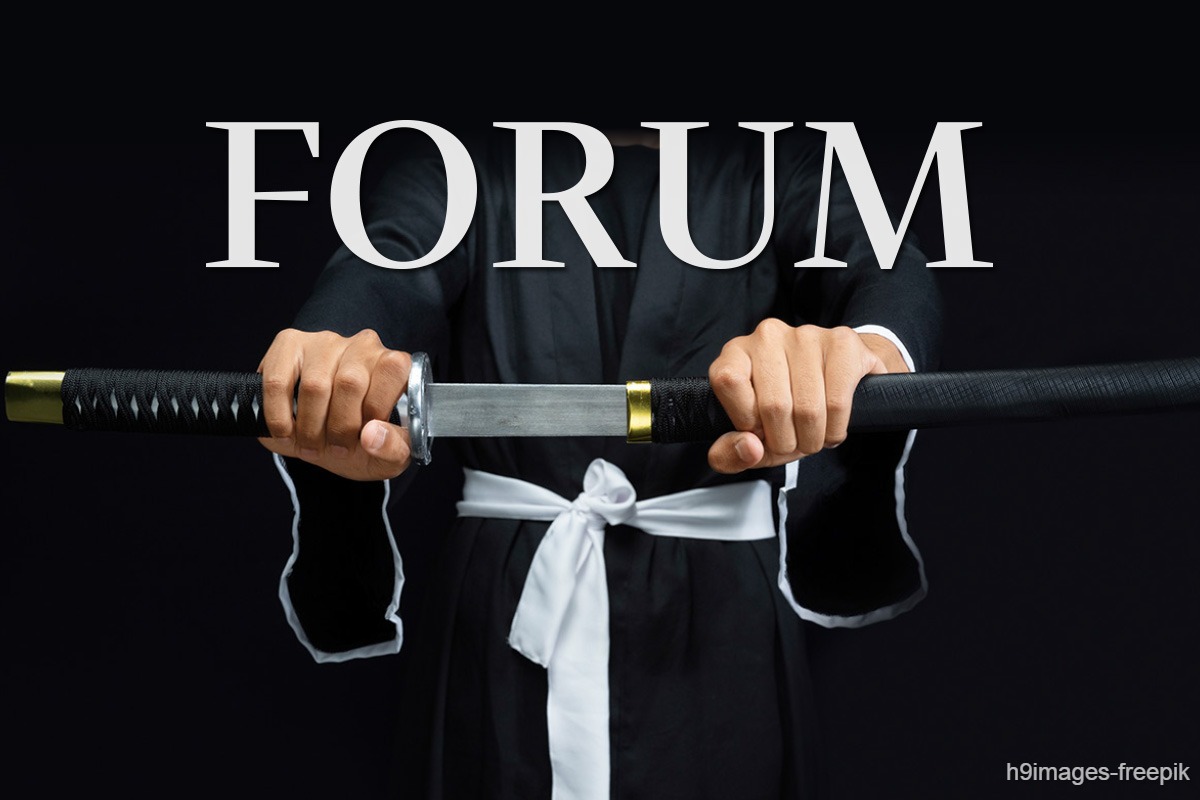
In Japan, where it started, a craftsman will sand a blade a thousand times until its surface reflects the world like a mirror. Not because someone is watching but because excellence is the minimum they owe to themselves.
The Japanese call it monozukuri — the sacred craft of making things with soul, discipline and responsibility.
But in truth, monozukuri is not only about creating. It is about character. It is about leadership. It is about the way a nation chooses to conduct itself. And today, Malaysia needs a new standard — a new spirit — to guide those who hold responsibility in their hands.
Now imagine if Malaysian leadership held the same sacred obligation:
● A university vice-chancellor who protects academic standards like a swordsmith guards his forge;
● A CEO who treats every sen of public money as if it were his father’s savings;
● A minister who measures success not by applause but by the precision of execution;
● A director-general who walks the ground weekly, learns from the rakyat and solves problems at the source.
Then leadership becomes moral craftsmanship. Public service becomes a proud art. Integrity becomes a national identity. That is Monozukuri. That is what we lack. But that is what we can build.
Every Rancangan Malaysia, every blueprint and every vision document has brilliance inside it. But brilliance without execution is still failure. Japan learned this long ago: A poor plan executed with precision is better than a brilliant plan executed sloppily.
Malaysia’s challenge is not intelligence. It is discipline, follow-through, accountability and the courage to keep improving, brick by brick, day by day, unglamorous and uncelebrated.
A monozukuri leader does not chase headlines. He chases results. Quiet results. Permanent results. Results that speak long after he has left the office.
Respect for people is not a slogan — it is the foundation of excellence.
Our culture is kind but our workplaces are often harsh. We have talent but we suffocate it with rank, formality, fear and politics.
In monozukuri, respect is not politeness.
Respect means:
● listening to frontline workers;
● empowering experts;
● training people until they can surpass their leaders; and
● holding everyone — from tea lady to director — to a standard of dignity and quality.
True respect is when a young engineer, nurse, soldier, teacher, coder or technician feels: “My leaders believe in me. My work matters. My ideas count.”
Respect is the raw material of national excellence. Without it, no country can rise.
The courage to remove waste — including ego
Malaysia loses billions every year to administrative waste, overlapping agencies, political appointments, corruption, unnecessary layers and ego-driven decisions.
Monozukuri teaches that waste is not only financial.
Waste is:
● stalled decisions;
● vanity projects;
● meetings without outcomes;
● leaders who refuse to admit mistakes; and
● talent leaving because no one listens.
The greatest waste of all? Ego.
A nation rises when leaders put aside personal pride for collective progress. A nation collapses when leaders confuse their position with their identity.
If we are to move forward, ego must die.
Only then can Malaysia live.
Malaysia can rise stronger — if its leaders transform themselves first
Malaysia is not short of potential. We are short of leaders with monozukuri hearts — leaders who walk the ground, honour the rakyat and remove waste. Leaders who execute with precision, nurture their people, protect public trust and lead with integrity even when no one is watching.
This nation does not need perfect leaders. It needs craftsman leaders — those who see leadership as a sacred duty, not a personal privilege.
If you guard our nation’s security, lead a ministry, government-linked company, university, corporation, agency or movement — the nation watches you.
The rakyat hopes you are different from the ones who disappointed them, from the ones who compromised standards, from the ones who forgot the meaning of service.
Malaysia needs you to rise above that. Malaysia needs you to lead like a craftsman.
Lead with precision. Lead with discipline. Lead with humility. Lead with soul.
Lead with the spirit of monozukuri.
Because only then can Malaysia rise high — not through slogans, not through political cycles and not through luck — but through the firm hands of leaders who craft excellence the way a master shapes steel: Patiently. Proudly. Perfectly. For the nation. For the future. For the generations yet to come.
Zakie Shariff is executive chairman of Kiarafics Sdn Bhd, a strategy consulting group. He is also an adjunct professor at the Faculty of Industrial Management, Universiti Malaysia Pahang.
Save by subscribing to us for your print and/or digital copy.
P/S: The Edge is also available on Apple's App Store and Android's Google Play.
The content is a snapshot from Publisher. Refer to the original content for accurate info. Contact us for any changes.
Comments